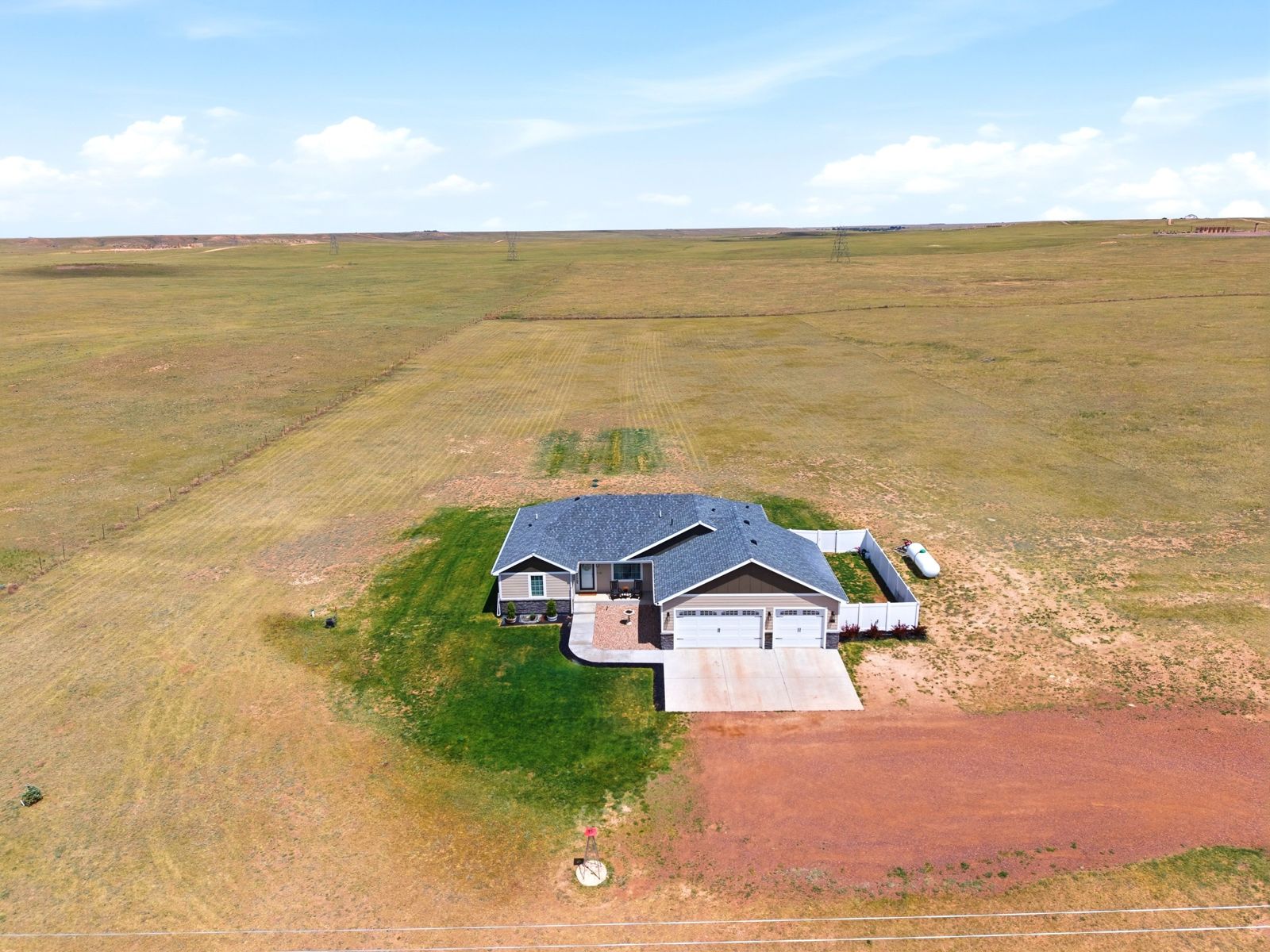
When you buy land in Wyoming, you're buying the surface. Whether you're also buying what's underneath is a separate question, and the answer is in the records, not the listing.
Minerals can be split off from the surface and owned by someone else, sometimes for more than a century. That split is called a split estate, and it can sit under acreage or a lot in a subdivision.
Here's how minerals get separated, the four places to look before you close, and what Wyoming law gives you as a surface owner if the minerals belong to someone else.
How minerals get split from the surface
There are two common ways it happens.
The federal government kept them. The Bureau of Land Management (BLM) explains that under the Stock Raising Homestead Act of 1916, a settler could claim 640 acres of non-irrigable land. The government kept the minerals. Today the person holding that patent owns the surface, and the minerals belong to the United States, managed by the BLM. The BLM says the landowner doesn't have the right to sell those minerals.
A past owner kept or sold them. Minerals can also be reserved in a deed or sold on their own. Wyoming's paperwork reflects this. The Laramie County Statement of Consideration form lists "mineral interests without surface estate" as its own kind of transfer.
Either way, the split can be decades old and still show up in the records today.
Place 1: the deeds at the County Clerk
Start with the chain of deeds for the property, oldest to newest. You're reading for any deed where an earlier owner held back the minerals or conveyed them to someone else.
In Laramie County, recorded documents are with the County Clerk's Real Estate Recording office at 309 W. 20th St., Suite 1600, in Cheyenne. It's open Monday through Friday, 8 a.m. to 5 p.m., at 307-633-4350. As of November 2026, the Clerk charges $0.50 a page for printed copies, $1 a page by email and $5 to certify a document.
A few things to look for as you read:
- Words like "reserving" or "excepting" followed by oil, gas or minerals
- A fraction of the minerals held back, like one-half, rather than all of them
- Any separate mineral deed, lease or royalty document recorded against the same legal description
Older deeds can be hard to read, and the wording matters. That's where an attorney earns their fee, which I'll get to below.
Place 2: your title commitment
When you're under contract, the title company sends a title commitment. Its list of exceptions shows recorded documents the policy won't cover.
Ask the title company three things in writing:
- Does anything in the exceptions reserve or convey minerals?
- Can you send copies of every recorded document listed?
- Does the owner's policy cover anything about the mineral estate, or exclude it?
If a mineral reservation shows up, read the actual document. The exception line alone won't tell you how much was reserved or to whom.
Place 3: the federal records
If the land was ever federal, the original patent tells you which law it was granted under. The BLM says that's how you tell whether minerals were reserved to the United States.
You can check this from Cheyenne:
- Original patents: the BLM's Wyoming Public Room page links its General Land Office Records site, glorecords.blm.gov, and the Public Room provides copies of land patents, certified or not.
- Master Title Plats: the BLM says staff can review the master title plat for surface and mineral ownership. Its Wyoming Public Room page also links a Wyoming Master Title Plat search.
- In person: the BLM Wyoming State Office Public Room is at 5353 Yellowstone Road in Cheyenne, open Monday through Friday, 9 a.m. to 4 p.m. MT, at 307-775-6256. Staff can help you research and read BLM records. The BLM asks you to contact the office for research and copy fees and map prices.
Place 4: wells and permits nearby
Knowing who owns the minerals is one question. Knowing whether anyone is drilling near the property is another.
- Wyoming Oil and Gas Conservation Commission (WOGCC): the state agency that permits wells. Its Data Explorer lets you search wells by county or by township, range and section, filter by status and operator, and see them on a map. The WOGCC also has a WellFinder app for Android and iPhone that shows wells and permits near you. The office is in Casper at 307-234-7147, and its website lists a Surface and Mineral Owners resource page and a Split Estate Worksheet.
- Laramie County Planning and Development: the county's Oil and Gas page links a map of oil and gas permit locations that it says is updated weekly. Planning is at 307-633-4303.
If the minerals belong to someone else
You can still own and use your land. Wyoming has a law that sets rules for oil and gas operators who need to use the surface, W.S. 30-5-401 through 30-5-410.
Here's how the Legislature's own legal staff has described it:
- A 2022 staff memo says the law requires minimum notice to the surface owner, good faith negotiations, a chance at mediation or arbitration, a surety bond, and penalties for late damage payments.
- A 2024 staff paper says an operator can post a bond or other guaranty with the Oil and Gas Conservation Commission in place of getting the owner's written consent and a signed surface use agreement before operations start.
The exact notice deadlines and entry conditions are in W.S. 30-5-402. Read the current text in Title 30 on the Legislature's site, wyoleg.gov, or have your attorney walk you through it before you count on a date.
If the minerals are federal, the BLM says it will invite the surface owner to onsite inspections, and the surface owner can object to the amount of the operator's damage bond.
Notice and other mail about the property go to the owner on record, so after you close, make sure the Laramie County Assessor has your current mailing address.
Talk to a Wyoming attorney before you rely on any of this
Mineral title is its own specialty. A Wyoming real estate or oil and gas attorney can read the deed chain and give you a written opinion on who owns what. Get that done before your inspection deadline passes, while you can still act on what you learn.
I'm not an attorney, and nothing here is legal advice. We'll tell you the truth about what we find in the records on every property, and the choice is always yours.
Next step
Our free Buyer Guide covers inspections, title and every deadline in a Wyoming purchase. If you're looking at acreage around Cheyenne and want help pulling the records, text me at 307-317-5372. We're licensed in Wyoming and Colorado.
Quick answers
Do mineral rights automatically come with land in Wyoming?
Not always. Minerals can be reserved in a past deed, sold separately or kept by the federal government, so you have to check the records.
How do I find out who owns the mineral rights to my property in Wyoming?
Read the recorded deeds at the county clerk, ask your title company for every mineral exception, and check BLM patents and Master Title Plats for a federal reservation. An attorney can give you a title opinion.
What is a split estate in Wyoming?
It's when one party owns the surface and another owns the minerals underneath. The BLM says that under the Stock Raising Homestead Act of 1916, the federal government kept the minerals under the land it granted.
What notice does an oil and gas operator have to give a Wyoming surface owner?
W.S. 30-5-402 sets the notice an operator owes a surface owner, and the law also calls for good faith negotiations. Read the current text on wyoleg.gov, or ask a Wyoming attorney for the exact deadlines.
Cody Harvey
The Harvey Home Team | Compass
Call or text 307-317-5372
Sources
Facts checked November 22, 2026.
- Stock Raising Homestead Act of 1916, 640 acres of non-irrigable land, minerals reserved to the U.S., BLM administers, landowner can't sell SRHA minerals, check patent and Master Title Plat: BLM, www.blm.gov
- Surface owner invited to the pre-drilling onsite inspection, right to object to the damages bond: BLM, The Private Surface Owner, www.blm.gov
- BLM Wyoming Public Room: 5353 Yellowstone Road, Cheyenne, 307-775-6256, 9 to 4 MT, copies of land patents, Master Title Plat search, GLO Records link, staff help, contact for research and copy fees: www.blm.gov
- "Mineral interests without surface estate" listed as an exemption: Laramie County Statement of Consideration form, www.laramiecountywy.gov
- Laramie County Clerk recording office address, hours, phone, copy and certification fees: laramiecountywy.gov
- W.S. 30-5-401 through 30-5-410 require minimum notice, good faith negotiations, mediation or arbitration, a surety bond, late payment penalties: Wyoming Legislative Service Office memo, May 3, 2022, wyoleg.gov
- Bond or guaranty to the Commission in place of written consent and a surface use agreement, W.S. 30-5-402(c)(iv): Wyoming Legislative Service Office paper, April 15, 2024, wyoleg.gov
- Wyoming Statutes Title 30, current text (where to read 30-5-402): www.wyoleg.gov
- WOGCC resources: Casper office, 307-234-7147, Surface and Mineral Owners Resources, Split Estate Worksheet, Data Explorer: wogcc.wyo.gov
- WOGCC Surface and Mineral Owners page: wogcc.wyo.gov
- WOGCC Data Explorer search by county, township, range and section, filters, map: dataexplorer.wogcc.wyo.gov
- WOGCC WellFinder app, Android and iPhone, wells and permits on a map: wogcc.wyo.gov
- Laramie County Oil and Gas page, permit location map updated weekly, Planning 307-633-4303: www.laramiecountywy.gov