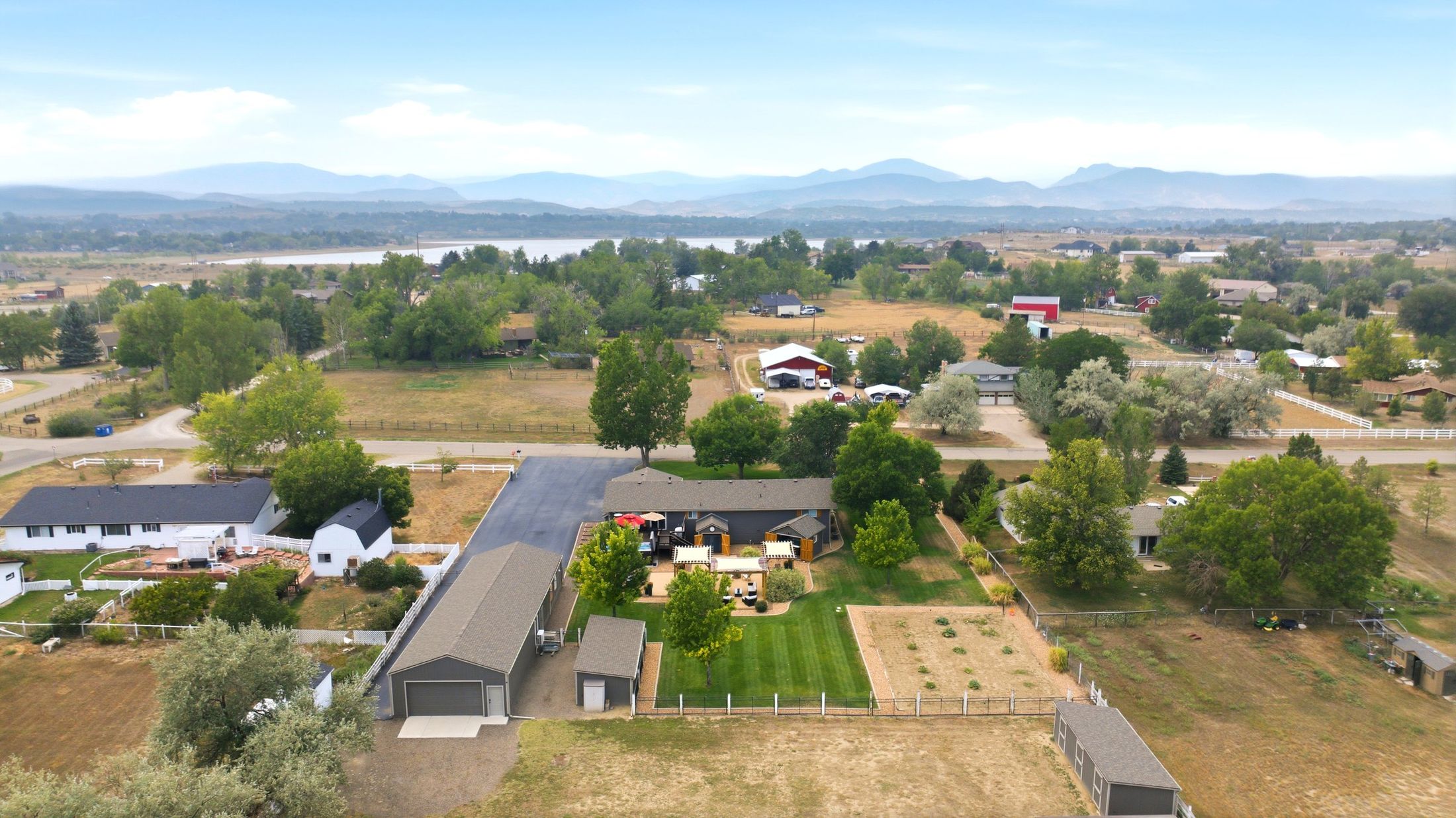
A brand new house is easy to love. Clean carpet, nothing to fix, and you pick the countertops.
The contract is a different story. When you buy from a builder, the paperwork often isn't the same as buying a home someone has lived in, and it's usually written to protect the builder first. That doesn't make it a bad deal. It just means you want to read it slowly.
Here's what to know before you sign for a new build in Fort Collins, Loveland, Windsor, Timnath, Greeley or anywhere else in Northern Colorado.
Whose contract is it?
When you buy a resale home in Colorado through brokers, the deal is written on the Colorado Real Estate Commission's Contract to Buy and Sell Real Estate (Residential). The Division of Real Estate says brokers are required to use Commission-approved contracts and forms. The rules also allow attorney-prepared forms in some situations, as long as the form says clearly that it isn't a Commission-approved form.
A builder may hand you its own purchase agreement, written by its own attorneys. If that's what you get, don't assume it works like the state contract. The deadlines, the ways out and the rules on your deposit can all be different.
I'm not an attorney. If you're signing a builder's own contract, have a Colorado real estate attorney read it before you sign. On a home this size, that's money well spent.
What to look for in a builder contract
Here's what I'd read first, and what to ask about each one:
- Your deposit. How much is it, and when is it refundable, if ever? What happens to it if your loan falls through?
- Upgrades and change orders. Many builders want money down on upgrades. Is that money refundable if the deal falls apart? What's the deadline to make changes?
- The completion date. Is it a firm date or an estimate? What happens if the home is late? Can the builder push it back, and for how long?
- The price. Is it locked, or can it change for things like material costs?
- Financing. Does the builder offer an incentive for using its preferred lender? Get a quote from another lender too and compare the full picture.
- Inspections. Can you bring your own inspector before drywall and again before closing? Get it in writing.
- The final walkthrough. How does the punch list work, and what happens if items aren't done by closing?
- The warranty. What does the builder warranty cover, for how long, and how do you file a claim?
- Disputes. Does the contract require arbitration or mediation? What's the process if something goes wrong?
What Colorado law makes the builder give you
Colorado has a few rules that matter to new-construction buyers no matter whose contract you sign.
Soils. The Colorado Geological Survey calls swelling soil a common and sometimes serious problem in Colorado. It says its guide for homebuyers satisfies part of the state's disclosure requirements for new houses built on swelling soil. Ask the builder early when you'll get the soils report and its site recommendations, and read it well before closing. It tells you what the foundation was designed for.
Metro district paperwork. A lot of newer neighborhoods sit inside a metro district, which adds its own property tax. Under a 2021 law, SB21-262, starting January 1, 2022, the seller of a newly built home inside a metro district has to give you, at or before signing the contract:
- Information about the district's finances, including its debt
- An estimate of the property taxes on the home at the time of sale
- The county treasurer's most current tax statement or certificate of taxes due, which a 2022 fix, SB22-164, spelled out
Ask whether the tax estimate counts the finished house or only the land. Read that part twice. We go deeper in our post on Colorado metro districts.
Since August 6, 2025, under HB25-1219, metro districts also have to hold a meeting at least once a year where residents can ask questions, and set up a way to reach someone after hours. Notice of the meeting goes to eligible electors by mail or email and gets posted on the district's website.
If something goes wrong after you move in
New homes can have problems too. Here's how I'd handle it:
- Start with the warranty. File the claim in writing, the way the builder's warranty tells you to, and keep a copy of what you send.
- Document it. Take dated photos, and write down when you first noticed the problem.
- Don't wait on bigger problems. Colorado has its own notice steps and time limits for construction defect claims against builders, and they're specific. If it's more than a warranty fix, talk with a Colorado construction attorney right away, before a deadline slips.
Keep every email, photo and warranty request in one place from the day you close. If you ever need it, you'll be glad you did.
Do you need your own agent on a new build?
The sales rep in the model home works for the builder. That's their job, and many are great at it. But they're not there to look out for you.
Your own agent can help you compare builders and communities, read the contract with you, keep track of the dates, push for the walkthrough items, and help you weigh resale down the road. Before you register at the model home, ask the builder how they work with buyer's agents. Some want your agent with you on the first visit.
We'll tell you the truth about every house, new or not. The choice is always yours.
Questions to ask before you sign
- Can I see the full contract, every addendum and the warranty before I put down a deposit?
- Is this lot in a metro district, and an HOA? What does each one cost?
- When will I get the soils report?
- Can my inspector come before drywall and before closing?
- Has the home been built with radon-resistant features, and has it been tested? The EPA says to ask, and to test every new home for radon as soon as possible after you move in, even if it was built to be radon-resistant. If a test shows 4 pCi/L or more, the EPA says a vent fan can be added to a passive system to make it active.
Next step
Our free Buyer Guide walks you through the whole purchase, start to finish. If you're looking at new construction homes in Northern Colorado, text me at 307-317-5372 before your first model home visit. We're licensed in Colorado and Wyoming, and we'll help you read the fine print.
Quick answers
Do Colorado builders have to use the state real estate contract?
Colorado requires brokers to use Commission-approved forms, with some room for attorney-prepared forms. A builder may hand you its own contract, so have it reviewed before you sign.
Does a Colorado builder have to disclose soils information?
Colorado has disclosure requirements for new houses built on swelling soil, according to the Colorado Geological Survey. Ask the builder early for the soils report and site recommendations, and read them before closing.
What does a seller have to disclose about a metro district on a new home?
Under SB21-262 and SB22-164, at or before signing, the seller of a newly built home in a metro district has to give you information on the district's finances and debt, a property tax estimate, and the county treasurer's current tax statement or certificate of taxes due.
What should I do if I find a defect in my new home?
File a written warranty claim with the builder, document everything, and for anything beyond a warranty fix, talk with a Colorado construction attorney right away about the notice steps and deadlines.
Cody Harvey
The Harvey Home Team | Compass
Call or text 307-317-5372
Sources
Facts checked November 20, 2026.
- Brokers required to use Commission-approved forms; counsel-prepared forms allowed in some cases with a conspicuous statement; no new construction contract listed: Colorado Division of Real Estate, dre.colorado.gov (opens in a new tab)
- Swelling soil "a common and sometimes serious problem in Colorado"; guide satisfies part of the state's disclosure requirements for new houses on swelling soil: Colorado Geological Survey, coloradogeologicalsurvey.org (opens in a new tab)
- SB21-262, seller of newly built home in a metro district gives district finance and debt information and a tax estimate at or before signing, starting Jan. 1, 2022; signed June 28, 2021: leg.colorado.gov (opens in a new tab)
- SB22-164, county treasurer's current certificate of taxes due or tax statement: leg.colorado.gov (opens in a new tab)
- HB25-1219, meeting at least yearly, after-hours contact, notice by mail or email and website, effective Aug. 6, 2025: Colorado Division of Real Estate, dre.colorado.gov (opens in a new tab)
- Ask about radon-resistant features and testing, test every new home after occupancy, 4 pCi/L and vent fan: EPA, www.epa.gov (opens in a new tab)